How AI Works: A Complete Guide to Artificial Intelligence
Artificial Intelligence (AI) is no longer a futuristic concept—it powers search engines, recommendation systems, chatbots, marketing platforms, self-driving technology, and more. Yet many people still ask the same questions: How does AI actually work? When did AI become a thing? And where does AI get its information?
How AI Works to Boost Traffic and Sales
This guide explains AI in clear, practical terms while covering its history, data sources, and modern applications.
What Is Artificial Intelligence?
Artificial Intelligence refers to computer systems designed to perform tasks that normally require human intelligence. These tasks include learning from data, recognizing patterns, understanding language, making decisions, and solving problems.
Unlike traditional software that follows fixed rules written by developers, AI systems can learn and improve over time. This ability to learn from experience is what sets AI apart from standard programming.
When Did AI Become a Thing?
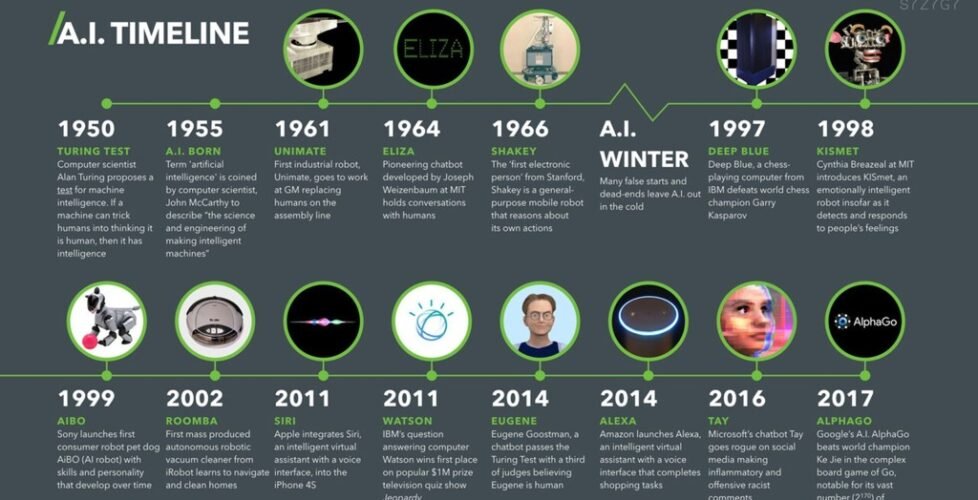
AI officially became a field of study in 1956, during the Dartmouth Summer Research Project on Artificial Intelligence. The term “Artificial Intelligence” was coined by computer scientist John McCarthy, who believed machines could be made to simulate every aspect of learning and intelligence.
Key Milestones in AI History
- 1950 – Alan Turing introduces the Turing Test, a method for evaluating machine intelligence.
- 1956 – The term Artificial Intelligence is formally introduced.
- 1960s–1970s – Early AI programs solve math problems and play games, but computing power is limited.
- 1980s – Expert systems emerge, using rule-based logic for business decisions.
- 1997 – IBM’s Deep Blue defeats chess champion Garry Kasparov.
- 2010s – Breakthroughs in machine learning, big data, and GPUs fuel modern AI growth.
- 2020s – Generative AI, large language models, and real-time automation become mainstream.
While AI has existed for decades, it became widely practical only in the last 10–15 years due to advances in computing power, data availability, and algorithms.
How AI Works at a High Level
At its core, AI works by combining data, algorithms, and computing power.
- Data – AI learns from large amounts of information.
- Algorithms – Mathematical models analyze patterns within that data.
- Training – AI systems adjust their internal parameters to improve accuracy.
- Inference – Once trained, AI applies what it learned to new inputs.
This process allows AI to make predictions, classifications, recommendations, or generate content.
Machine Learning: The Foundation of Modern AI
Most modern AI relies on machine learning (ML), a subset of AI that enables systems to learn from data without explicit programming.
Common Types of Machine Learning
- Supervised Learning – AI is trained on labeled data (e.g., spam vs. non-spam emails).
- Unsupervised Learning – AI finds patterns in unlabeled data (e.g., customer segmentation).
- Reinforcement Learning – AI learns through trial and error using rewards and penalties (e.g., game-playing AI).
Machine learning models continuously improve as they are exposed to more high-quality data.
Deep Learning and Neural Networks
Deep learning is a specialized form of machine learning inspired by the human brain. It uses neural networks—layers of interconnected nodes that process information.
Each layer extracts increasingly complex features:
- Early layers detect basic patterns
- Deeper layers recognize relationships and meaning
This is how AI can recognize faces, understand speech, translate languages, and generate realistic text or images.
Where Does AI Get Its Information?
AI does not “know” things in the human sense. Instead, it learns patterns from training data. The quality, diversity, and accuracy of that data directly impact AI performance.
Primary Sources of AI Data
- Publicly Available Data
Websites, books, articles, academic papers, and open datasets are common sources. - Licensed Data
Some AI systems are trained on data obtained through legal licensing agreements. - Human-Created Data
This includes annotated datasets, expert-written examples, and human feedback used during training. - User Interaction Data
In some systems, anonymized usage patterns help improve performance, depending on privacy policies.
Importantly, AI models do not browse the internet in real time unless explicitly designed to do so. Most AI relies on data available up to a specific training cutoff date.
Training vs. Real-Time Knowledge
One common misconception is that AI “knows everything.” In reality:
- AI models are trained on historical data
- They do not have awareness or consciousness
- They generate responses based on probability and learned patterns
Some AI tools integrate live data sources, APIs, or search engines, but the core model itself does not continuously learn unless retrained.
How AI Makes Decisions
AI decision-making is based on statistical probability, not understanding or intent.
For example:
- A recommendation engine predicts what you might like based on similar user behavior.
- A marketing AI predicts which ad is most likely to convert.
- A chatbot predicts the most relevant next word or response.
The system selects outputs that statistically best match the input, given its training.
Real-World Applications of AI
AI is now embedded across industries, including:
- Marketing – Personalization, ad optimization, customer insights
- Healthcare – Diagnostics, medical imaging, drug discovery
- Finance – Fraud detection, algorithmic trading, credit scoring
- Ecommerce – Product recommendations, pricing optimization
- Software Development – Code generation, testing, automation
These applications show how AI improves speed, efficiency, and scalability.
The Role of Ethics and Data Quality
AI is only as good as the data it learns from. Biased or inaccurate data can lead to biased outcomes. This is why modern AI development emphasizes:
- Ethical data sourcing
- Bias detection and reduction
- Transparency and explainability
- Human oversight
Responsible AI ensures systems are fair, accurate, and aligned with real-world values.
The Future of AI
AI will continue evolving toward more adaptive, multimodal, and context-aware systems. Future advancements will focus on:
- Better reasoning and problem-solving
- Improved human-AI collaboration
- More efficient and specialized models
- Stronger privacy and security controls
As AI becomes more integrated into everyday tools, understanding how it works is essential for businesses and individuals alike.
Final Thoughts
AI works by learning patterns from data using advanced algorithms and massive computing power. While the concept dates back to the 1950s, recent technological advances have transformed AI into a practical, powerful force across industries. By understanding where AI gets its information and how it processes it, you can better leverage AI responsibly and effectively.
AI isn’t magic—it’s math, data, and logic working at scale.
Frequently Asked Questions
When did artificial intelligence become a real technology?
AI began as a formal concept in 1956, but it became practical in the 2010s. Advances in computing power, cloud technology, and access to large datasets allowed AI systems to learn faster, scale efficiently, and deliver real-world applications across many industries.
Where does AI get its information from?
AI gets its information from a mix of publicly available data, licensed datasets, and human-created training content. During training, AI learns patterns from this data but does not access real-time information unless specifically connected to live data sources or external tools.