Microlearning in 2026: The Future of Learning
Microlearning is a modern educational approach increasingly gaining traction due to its effectiveness in delivering content in short, focused segments. Defined as a method of learning that involves delivering content in small, manageable units, microlearning contrasts sharply with traditional learning methods that often utilize lengthy lectures or extensive materials. With microlearning, learners engage with easily digestible content, which can be accessed anytime and anywhere, making it an appealing choice in our fast-paced world.
The principles of microlearning emphasize brevity and relevance, allowing learners to focus on specific topics without cognitive overload. By delivering bite-sized information, microlearning reduces the time spent on learning activities, aligning well with today’s busy schedules. This method accommodates various learning styles as it can be presented through videos, quizzes, infographics, or even short articles, catering to diverse preferences among learners.
The origins of microlearning can be traced back to the rise of digital technologies and the need for flexible learning solutions. It evolved as a response to the constraints of traditional education systems, recognizing the necessity to adapt to an increasingly information-saturated environment. Research reveals that microlearning effectively addresses common learning challenges, such as reduced attention spans, which are reportedly as short as eight seconds for some individuals. Furthermore, it is designed with retention in mind, promoting better memory recall through spaced repetition and continuous engagement with the material.
The growing popularity of microlearning can be attributed to these intrinsic benefits, particularly in the workplace where efficiency and rapid knowledge acquisition are crucial. By understanding the reinforcing psychological principles behind microlearning, educational institutions and organizations can create tailored e-learning experiences that not only enhance understanding but also increase retention rates, ultimately leading to more effective learning outcomes.
The Rise of Microlearning in 2026
By the year 2026, the landscape of education and workplace training has transformed significantly, largely due to the innovation of microlearning methodologies. Microlearning refers to the technique of delivering educational content in small, manageable segments that are easily digestible for learners. Several factors have contributed to the accelerated adoption of this model, shaping learning experiences across various environments.
One prominent driving force is the rapid advancement in technology, which has rendered educational materials more accessible than ever. Digital platforms featuring mobile applications, online courses, and interactive tools enable organizations and educational institutions to implement targeted microlearning programs effectively. This flexibility caters to the diverse needs of learners who seek immediate access to relevant information rather than traditional lengthy courses.
The COVID-19 pandemic further catalyzed this shift as educators and companies had to adapt to remote learning methods. This situation heightened the demand for on-demand educational content that could fit into learners’ schedules. Microlearning addresses this need by providing concise lessons that can be consumed in short bursts, allowing individuals to learn at their own pace within busy or unpredictable lifestyles.
Additionally, the evolving nature of work in a digital society has necessitated continual skill development, which microlearning supports through its iterative approach to instruction. The emphasis on lifelong learning becomes increasingly vital, as professionals must regularly update their skills to remain competitive. This trend has prompted organizations to seek effective learning solutions that can deliver content swiftly and efficiently, making microlearning an attractive option.
In conclusion, the combination of technological innovation, changes in demand for flexible learning, and the need for ongoing education has significantly contributed to the rise of microlearning in 2026. The future of learning, undoubtedly, appears increasingly oriented towards these concise, focused educational strategies.
Benefits of Microlearning for Modern Learners
Microlearning has emerged as a transformative approach to education and skill development, catering effectively to a diverse array of learners in today’s fast-paced environment. One of the primary advantages of microlearning is its ability to suit various learning styles. Unlike traditional methods that often rely on lengthy sessions and dense content, microlearning delivers information in short, digestible segments, making it easier for visual, auditory, and kinesthetic learners to grasp crucial concepts quickly.
Engagement is another significant benefit of microlearning. The brevity and flexibility of these learning modules encourage participation by keeping learners focused and less overwhelmed. Cengage’s report highlights that nearly 70% of surveyed learners prefer bite-sized content, which aligns with modern attention spans. This format not only holds interest but also allows for quick application of knowledge, thereby enriching the overall learning experience.
Retention rates are notably improved when utilizing microlearning techniques. Research indicates that learners can retain up to 80% of information delivered in short, focused bursts compared to only 20% from traditional, longer courses. This attribute is especially essential for employees who require immediate access to knowledge to apply it on the job effectively. For instance, a case study involving a multinational corporation showed a 50% increase in employee retention of training material when a microlearning strategy was implemented.
Accessibility is yet another significant advantage, particularly for individuals with busy schedules. Microlearning allows learners to engage with content at their convenience, promoting lifelong learning without the constraints of time. Employees, students, and independent learners can all benefit from the flexibility microlearning provides, aiding them in balancing their professional and personal development ambitions. This adaptability addresses the modern learner’s needs and aligns with the ongoing shifts in educational paradigms.
The Future of Microlearning: Predictions and Innovations
As we project into the future of microlearning beyond 2026, several key predictions and innovations are anticipated that may reshape the landscape of educational methodologies. One potential development is the increased utilization of artificial intelligence (AI) in crafting personalized learning experiences. AI capabilities can analyze individual learning patterns and adapt content delivery accordingly, providing a tailored approach that enhances the effectiveness of microlearning modules. This customization ensures learners engage with material that suits their unique needs, leading to improved retention and application of knowledge.
Moreover, the integration of augmented reality (AR) and virtual reality (VR) in microlearning initiatives is expected to revolutionize the way knowledge is imparted. By combining immersive experiences with micro-sized educational content, organizations can simulate real-world scenarios, enhancing learner participation and engagement. Such technologies can transport learners into interactive environments where they can practice skills safely and effectively, thereby solidifying their learning through experiential practice.
Organizations will also need to adapt their training methods to align with these emerging trends. This adaptability may entail the significant redesign of existing training infrastructures to accommodate new technologies and learning styles. Furthermore, the rise of microlearning will likely encourage a shift in organizational culture towards continuous learning and development. The challenge will be to foster an environment where microlearning is not only accepted but actively encouraged, as well as to overcome potential obstacles related to resource allocation and the integration of advanced technology.
In conclusion, the future of microlearning appears promising, with advancements in technology driving innovative learning solutions. By embracing these predictive trends, organizations can enhance their training programs, ultimately fostering a more competent workforce that is poised to adapt to the complexities of a rapidly changing environment.
Frequently Asked Questions
How does microlearning improve learning outcomes?
Microlearning improves outcomes by reducing cognitive overload and increasing engagement. Short lessons help learners absorb information faster, retain it longer, and apply skills immediately.
Who benefits most from microlearning?
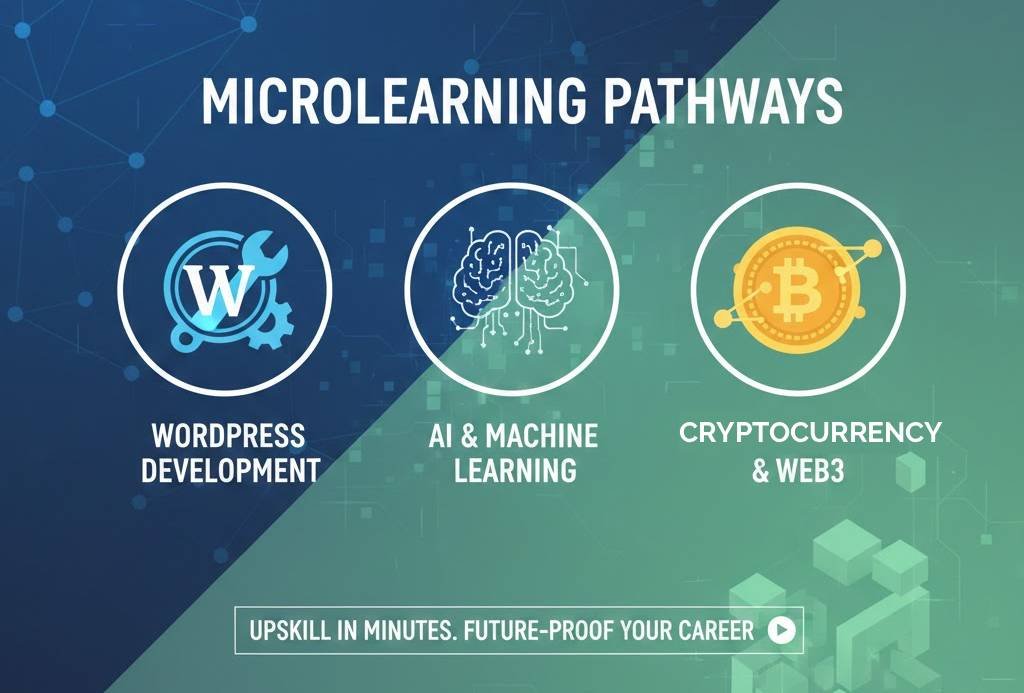
Microlearning benefits professionals, students, and beginners who want flexible learning. It’s ideal for upskilling, onboarding, and learning digital skills like AI, crypto, and WordPress.